The context platform for
trusted AI
Actian is the only data intelligence platform that gives AI semantic understanding, lineage, quality indicators, business context, and conversational analytics.




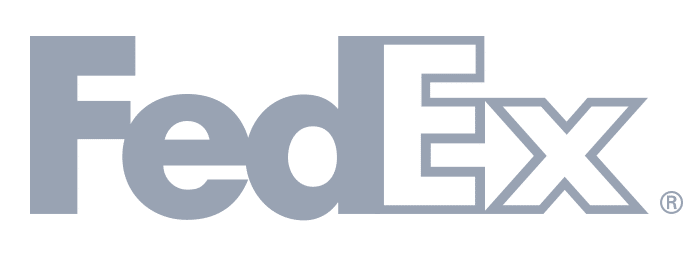







The missing layer between your data & your AI
It all comes together in one platform—knowledge graphs, data observability, conversational analytics, and contract-first governance—so AI can scale with accuracy and control.
Federated knowledge graph gives every asset a semantic identity, so AI understands business meaning, not just column names. Bottom-up cataloging across all sources, with a Steward Agent to maintain definitions and contract-first governance.
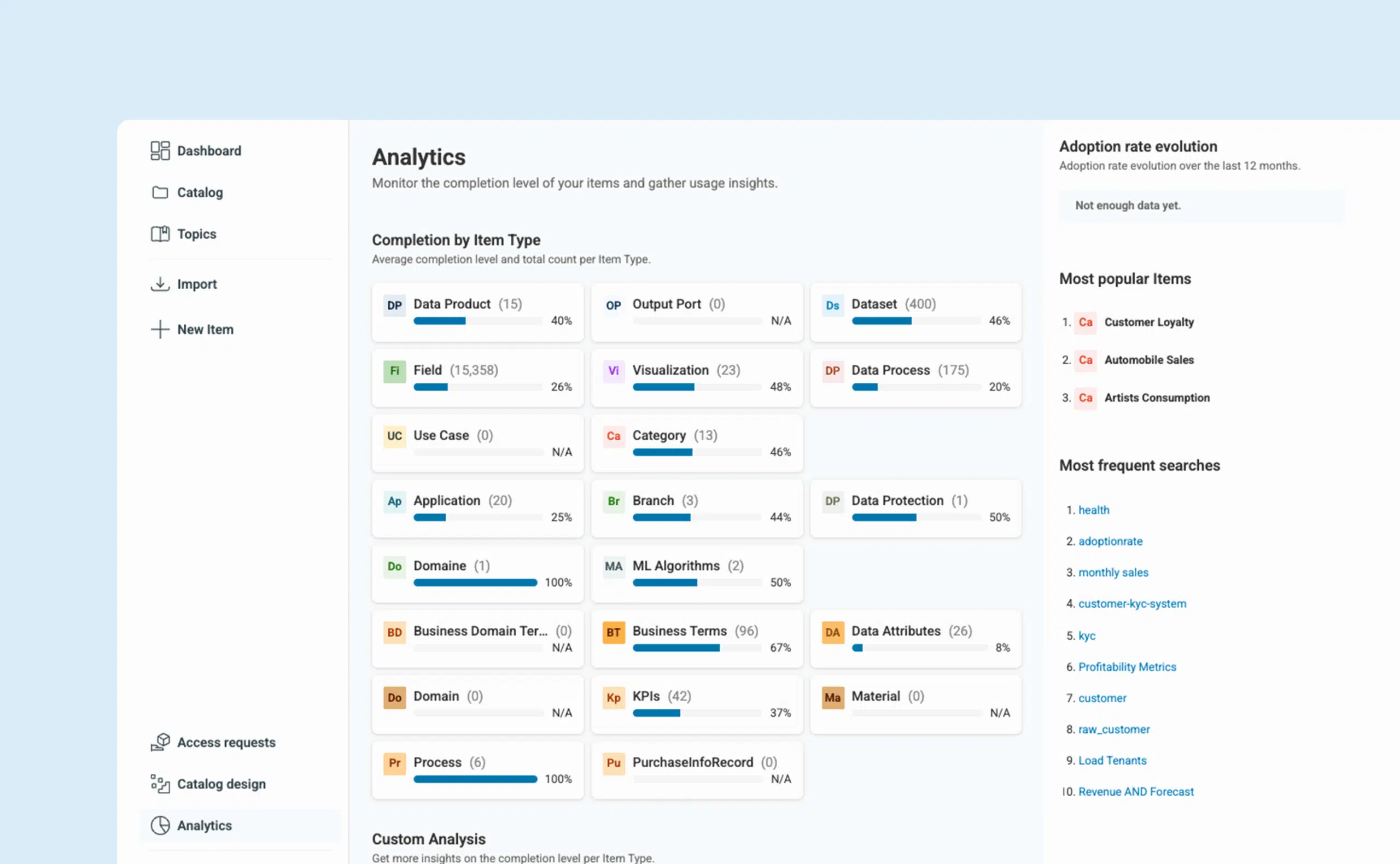
Continuous monitoring is built into the platform. It validates data health in real time, enforces data contracts, and provides AI agents with automated trust signals, enabling them to operate without human checkpoints.
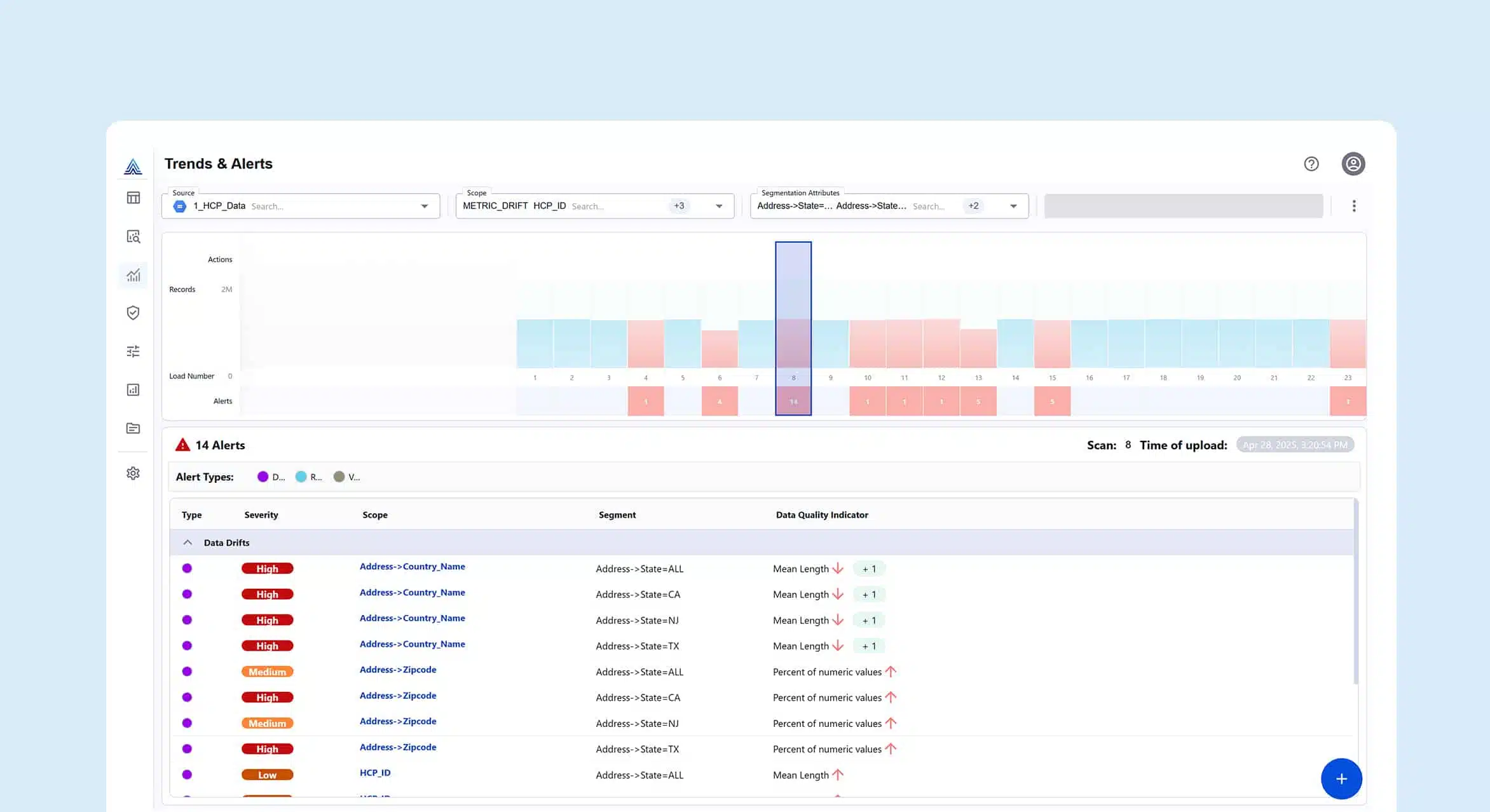
Natural language interface (NL-to-SQL), context-aware and embedded in workflows, lets business users query data in Slack or Teams, delivering instant, governed answers through approved templates and real-time validation.
Deploy in days, not months
Transform your data catalog into an intelligence platform: the only solution that combines a federated knowledge graph, real-time quality and observability, conversational analytics, and contract-first governance for agentic AI. Deploy in days with 100+ connectors, friendly UI, and immediate value for business users and data teams alike.
Discover and understand all your data instantly
Data & IT Leaders can eliminate 80% of time wasted searching for data with AI-powered natural language search, federated knowledge graphs, and hierarchical glossaries with instant business context – built on governed metrics, relationships, and business logic defined upfront.

Pass audits without slowing AI innovation
Data Quality & Governance leaders can replace rigid validation workflows with watchlists that provide visibility without blocking contributors, embed security policies directly in data contracts, and maintain automated audit trails with field-level lineage.

Activate AI agents with production-ready data
AI/ML Engineering Leaders can eliminate the 60% AI failure rate by enabling agents to verify data through contracts, understand context through knowledge graphs, and monitor it with real-time observability—delivering accurate and consistent results with transparency into how answers are produced.
One unified platform. Infinite agentic possibilities.
From data discovery to AI activation, empower every user with intelligent, governed access to your enterprise knowledge graph.
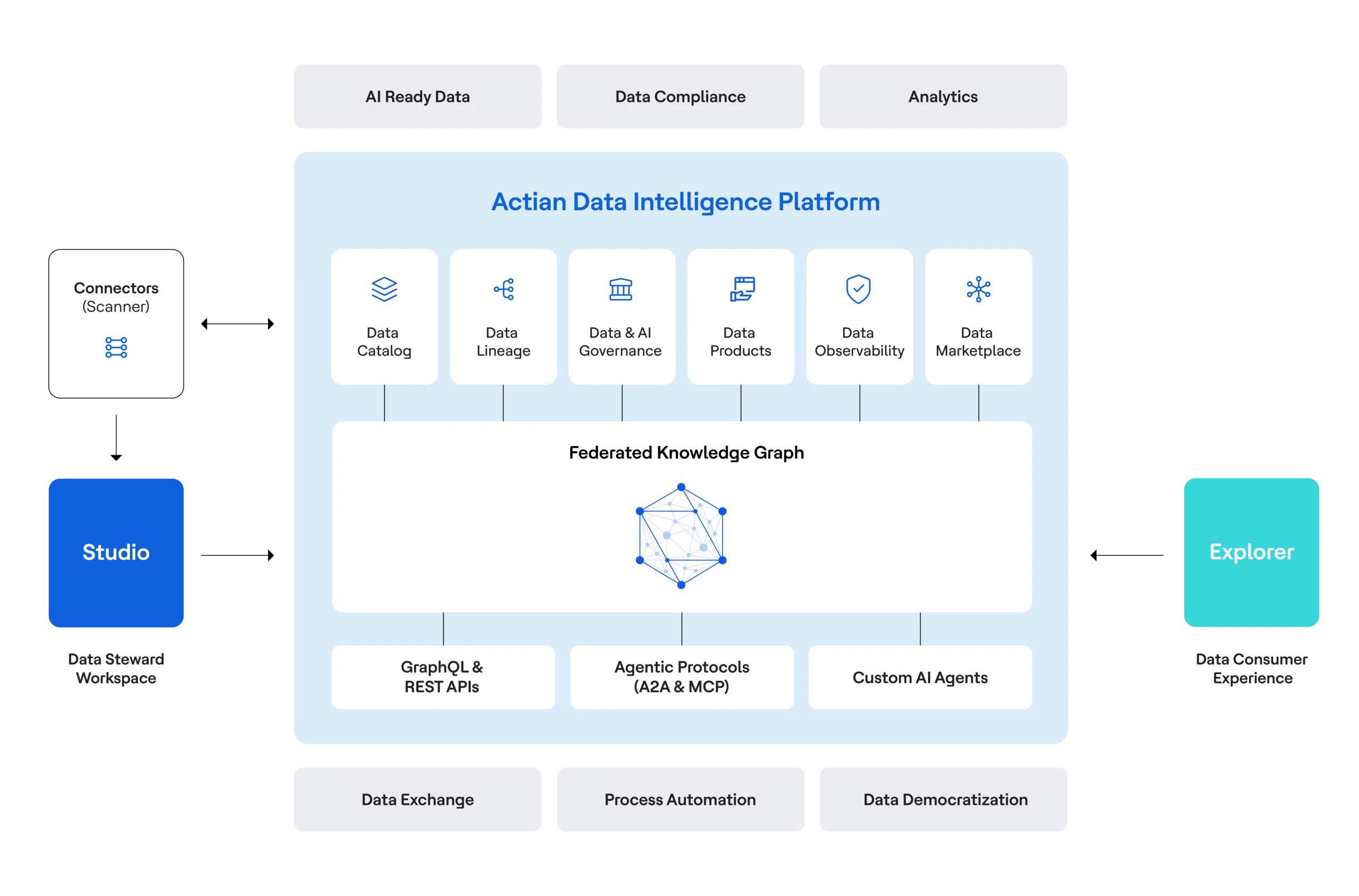
Enterprise-ready use cases for agentic AI, regulatory compliance, and self-service analytics

Discover, understand, & access all your data instantly
Unified Data Catalog and Data Marketplace for centralized discovery and ready-to-use data products and contracts.
Federated Knowledge Graph with domain-specific ontologies to maintain local autonomy while connecting to the enterprise semantic layer.
Conversational Interface dynamic question-and-answer interactions, allowing users to ask follow-ups without switching reports.
Data Access Request Management for webhooks and use-case management for data access, reducing workloads.
Peer-to-Peer Sharing between domain/sub-catalogs breaks down silos while maintaining governance.
Chrome Plugin provides comprehensive context and business definitions directly in BI dashboards.
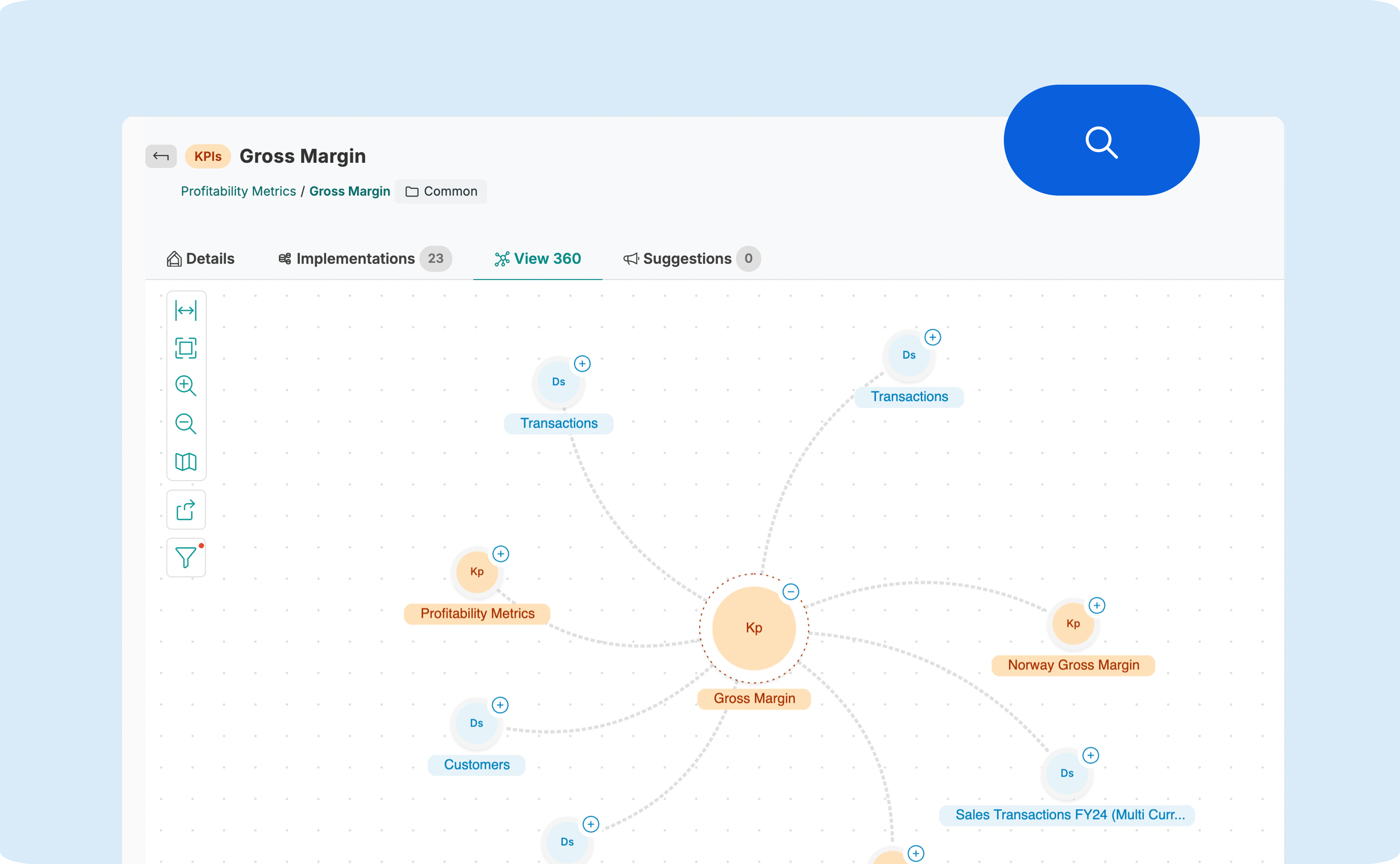
Build trust, mitigate risk, and ensure regulatory compliance
Complete Data Lineage with visualization connectors for semantic models and end-to-end tracking of data transformations.
Contract-First Data Products with embedded security policies and automated violation detection for data reliability.
End-to-End Data Integrity monitoring from ingestion to consumption with automated quality issue resolution.
Steward Agent defines governed metrics and relationships, reducing semantic drift and ensuring consistent analytics over time.
AI Glossary Builder for universal business language and automated term extraction from BI dashboards.
Built-in Compliance with automated classification and audit trails for GDPR, CCPA, and BCBS 239 regulations.
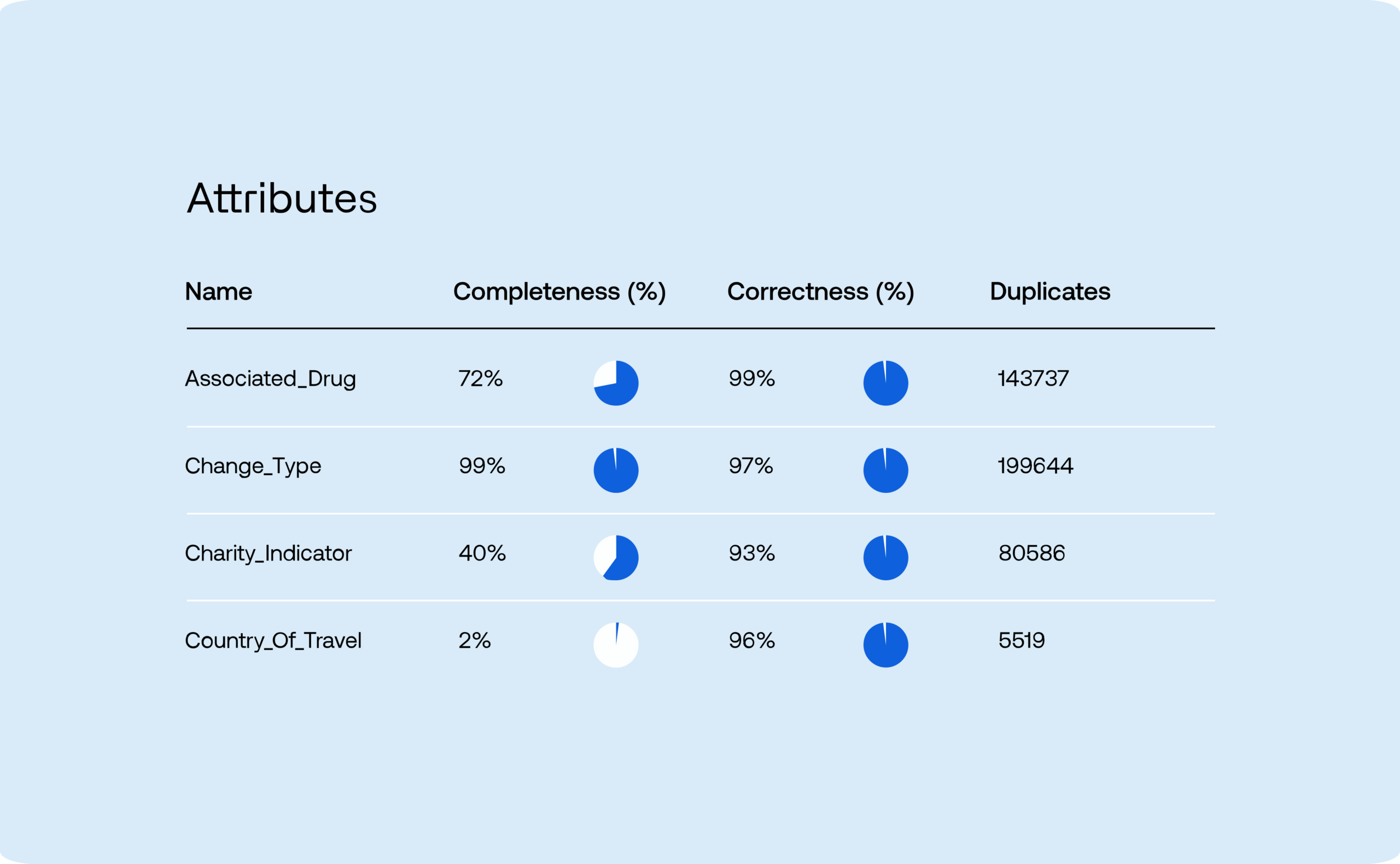
Activate trusted data with agents and automations
Custom AI Agents bridge your data catalog and AI assistants for contextual answers with definitions, ownership, and lineage.
Slack and Teams Integration delivers analytics in-flow, reducing friction and expanding usage beyond BI tools.
Natural Language Data Access with pre-trained agents that understand business questions and generate SQL with governance controls.
Automated PII Detection with AI-driven classification and tagging of sensitive data across all sources.
Real-Time Data Validation through secure MCP server connections delivering trusted metadata to AI tools.
Intelligent Quality Workflows that automatically validate inputs, flag issues, and orchestrate quality checks across workloads.
See how GEMA achieved 140% ROI
Read GEMA’s Data to AI Journey: 11 Models in Production and €3M in Annual Value With Actian.

Move data faster. Sync from 100+ no-code connectors and APIs.
Get a single pane of glass view across your entire data ecosystem.
Move data faster. Sync from 100+ no-code connectors and APIs.
Get a single pane of glass view across your entire data ecosystem.
















Trusted by data and AI leaders






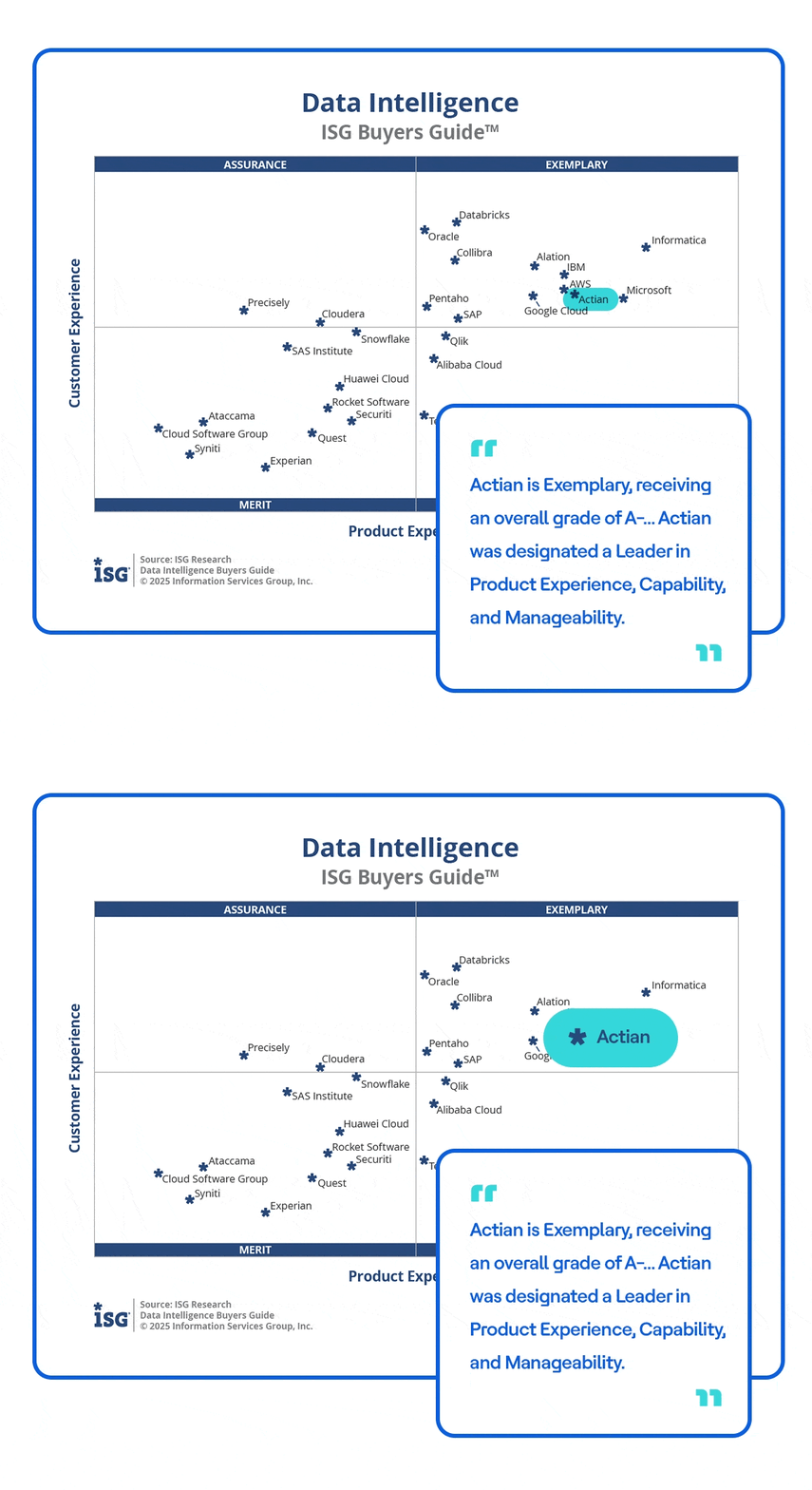
Recognition from industry experts
Actian Honored on DBTA 100 List for 2026
Actian is recognized on the Database Trends and Applications’ DBTA 100 Companies That Matter Most in Data for 2026.
Data Catalog Solution of the Year
The 2026 Data Breakthrough Award recognizes the breakthrough innovation of the Actian Data Intelligence Platform.
InfoWorld 2025 Technology of the Year Award Winner
Actian Data Intelligence Platform named winner of the Data Management: Governance category for InfoWorld 2025 Technology of the Year Awards.

Actian’s platform is well architected and addresses real organizational pain points, including inconsistent data, a lack of trust in analytics, and growing compliance burdens.
We are able to centralize our analytics and BI data into a single solution, which represented a big advantage for Lufthansa Cargo.
We had to organize ourselves around our operational needs. Actian allowed us to think big, start small, and scale up easily.
Actian’s data catalog builds the bridge between business and data at Autostrade. From a business perspective, it is fast, complete, easy to understand, and user-friendly. From an IT perspective, it is agile, scalable, and continuously upgradeable.